Habits, acquiring and transmitting.
When you live with other people, you inevitably pick up some of their habits. For instance, one of my university roommates had an efficient cleaning habit I adopted. She created cleaning baskets that lived in various spaces, loaded with supplies relevant to the room. I thought it a brilliant solution, far superior to dragging cleaning supplies around to each space, and I continue with it to this day.
Each bathroom cupboard holds a caddy that’s loaded with all that’s required to return the space to pristine condition, and there’s one above the stove in the kitchen for that space, too. I keep the stain remover and mending basket in the linen closet with the laundry hamper, the shoe cleaning basket in the hall closet, and the car-cleaning basket in the garage.
You offload habits, as well – without that truth, tobacco companies would never have grown into massive conglomerates. Nobody picks up smoking because of love. You have to work hard to push through the nausea, light-headedness, and dislike of taste to carry on sucking smoke into your lungs. I managed for thirty years.
Neuroses, habits, and routines, oh my.
Neuroses love habits, too. They can save themselves much time and effort if you commit to their desired and problematic behaviour without needing constant prompts. The wholesale adoption of maladaptive habits is part of what makes recovery a challenge – we don’t slough off these laid-in-stone routines as easily as we acquire them.
My eating disorder had me developing routines around eating. Basically, you should try to avoid doing it as much as possible. When eating ultimately becomes necessary as a result of the human condition – a truth that pissed me off often – I would then have to prove to my eating disorder that I was hungry enough to eat.
It was always a debate. The eating disorder thought that having eaten once, I was probably good for a lifetime, so getting permission for a meal was always a challenge. Much depended on the strength of the argument.
The debates.
“You shouldn’t be hungry” was the mantra my inside voice lectured me with for decades.
I was more likely to get eating disorder approval if I was arguing for some form of salad. Permission was easier to secure when the food’s water content was high. A bowl of lettuce “flavoured” with white vinegar and salt got instant approval; a waffle for breakfast was a trickier sell.
Caloric food involved serious negotiations, because you definitely shouldn’t need those. I’d promise to eat only vegetables for the rest of the day, to undertake two hours of exercise in the afternoon, and on and on – an agreement that bound only one side of the participants.
I’m often blindsided by neuroses that change their mind: permission rescinded after-the-fact, leading to consequences that were and are unpleasant.
They actually do that a lot, cheat: neuroses aren’t big on fair play.
But I digress.
The “should” wasteland.
I’ve been in recovery from many of my eating disorder behaviours for nearly seven years now, but I still engage in debate. I suspect I’m not alone, litigating my wants and emotions, given the number of times I hear the phrase “I shouldn’t” fall from someone else’s lips.
To hear internal “shoulds” is a clear sign that you’re sitting in judgment, and unfortunately, most of us sit in a negative space. I often tell myself that “I should get some exercise becaue I’m getting a bit soft,” but I never tell myself that “I should read another book because I do that well.”
“Thou shalt not should on thyself” is a good rule to go on with. We tend to trust our brains without question, but that’s an unearned trust, and often a mistake. Our brains lie to us, often. Mine regularly tells me to do stupid things, like moving something that’s far too heavy, or going toe-to-toe with a group of bullies on my own.
The oasis of the “coulds.”
I was told by my counsellor, some time ago, to replace the “shoulds” with “coulds,” and it does make a difference to how one moves about in life. It’s a gentler way of phrasing things, and I tend to respond to it better. My internal shoulds get my back up a bit.
I could go to the gym this afternoon has an entirely different feel from I should go to the gym this afternoon. The latter contains an imperative and pending judgment if one ultimately chooses not to go.
I’m trying to remember to pause and reflect when I find myself thinking in shoulds. I was doing quite well for a bit, but it’s remarkably easy to abandon things that are good for us. I don’t eat enough fresh fruits and vegetables. That’s the problem with being a carbovore.
The shoulds I shouldn’t.
The value judgment of should is an unnecessary addition to most of the exchanges it pops into.
For example:
I should go to the gym today; I ate a huge bowl of popcorn last night – as though those two things have anything to do with one another.
I shouldn’t be hungry; I ate a big lunch – as though eating once means that hunger should never happen again, or that hunger must adhere to the clock.
I shouldn’t say no; I don’t want to do X, but it doesn’t cost that much/take up that much time/isn’t that big a deal – as if “no” needs justifying, or is the starting point for negotiation. As if not wanting to isn’t sufficient.
Unfortunately, in too many of our brains, it isn’t, even when we talk to ourselves.
“No” is a complete sentence.
“No” is a complete sentence. We don’t owe other people explanations. We also don’t have to justify ourselves to ourselves, a habit I struggle with.
I used to think my critic lived in my head, but she’s such a pain in the ass that I’ve relocated her to an area just behind the appendix.
I used to think that what I really needed was a better argument, that I struggled because I’d yet to find the right words to convince myself, but engaging is actually the wrong tack to take. When it comes to conversing with your neuroses, the winning move is not to play. Embrace your inner toddler, and lean into “because I don’t want to” more regularly.
What you attend to, persists.
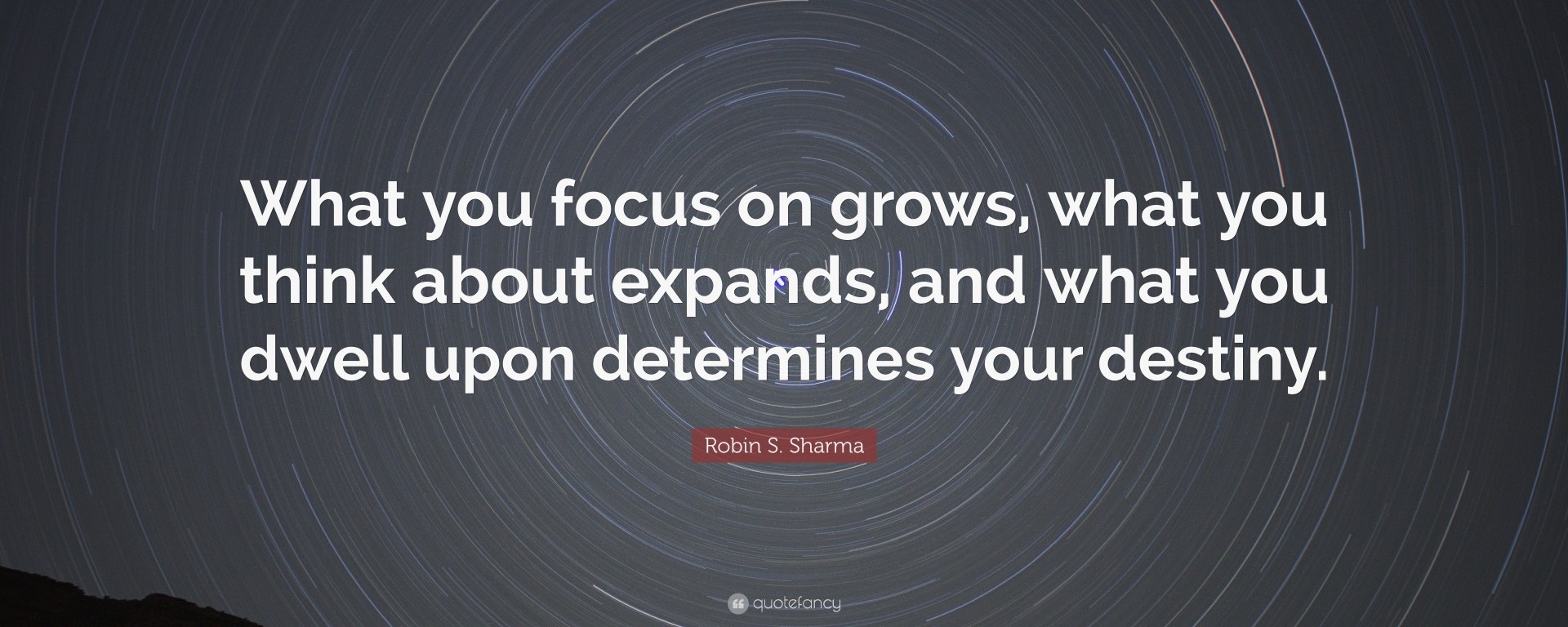
We don’t have to respond to every thought we have. What you focus on, grows. How and where you spend your energy determines much of your life’s outcome. 1
We can let go of the thoughts that flit across our brains instead of always entering the fray. Although I would like to get the best of myself, just once.
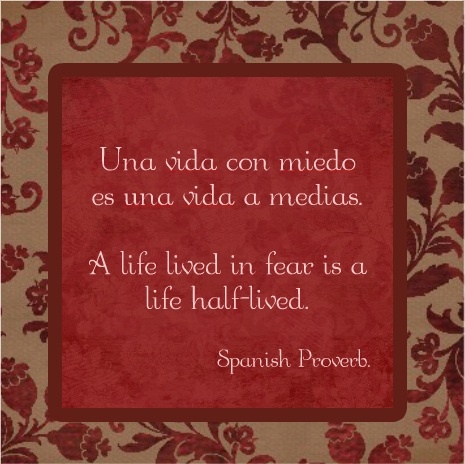
It’s a good idea to let go of the habits that cause us harm. The fear that rises inside of us when we think about doing so is just our instinctive response to our dislike of change, and you can ignore it.
Fear is a warning system, and it doesn’t cause you any real harm. A life spent not doing what you want to because of shoulds, on the other hand, will.
a favourite movie of mine.
- barring uncontrollable and negative externals, such as war. ↩︎

