I’m already tired.
2025 was quite the year for most of us, and 2026 looks to be more of the same, especially if one is attending to the grotesque array of geopolitical challenges facing us.
A pox on all who crave interesting times.
Are we sure I’m not trapped in a COVID coma dream?
Did you have “the US is collapsing into authoritarianism, warmongering, and fascism” on your bingo card?
I studied political science at university back in the day, so I kind of did – hegemons tend to collapse in their third century – but I admit the speed at which it’s occurring is beyond what I would’ve expected.
I don’t think the world is going to enjoy the United States’ gold-leafed Colosseum years very much: Nigeria and Venezuela definitely aren’t. The rise of greedy, right-wing nationalism slows international responses, problematic for people who prefer economic stability and a lack of armed conflicts, and for those whose ethics are aligned correctly.
Unfortunately, despite our “humans are awesome” posturing, we’ve got wars, disasters, and genocides amping up across most of the globe. I’m starting to think perhaps I should join up with family members in New Zealand. It’s far away from much.
I’m starting to think we failed to comprehend the meaning behind, “never again.”
But, I digress.
I was planning on disconnecting a bit from the news and social media in 2026. I was starting to feel unhappy and frustrated by the experience. There’s not so much connection in the online world of constant connection, and I’m getting tired of being sold. Unfortunately, abandoning socials is no longer on the cards given the precariousness of our current geopolitical stability. Remaining uninformed wouldn’t be responsible, nor would it be safe.
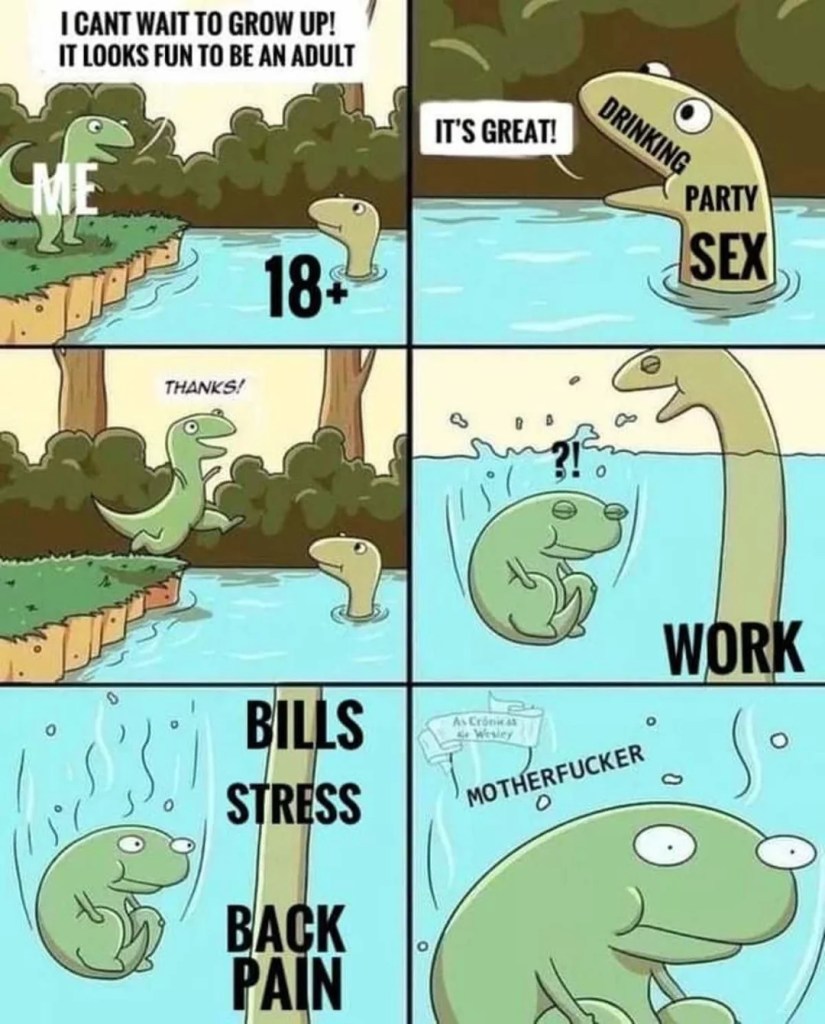
Sometimes, it sucks being an adult.
Often, actually.
The Passive Voice
I noticed as I was writing in my journal earlier today that I’m using the passive voice quite often. I dissociate when I’m stressed or distressed, and you can tick “yes” to both of those at the moment. I don’t do change particularly well, and my life these days is nothing but evolution, revolution, and adaptation.
The passive voice allows us to distance ourselves from what’s happening for us emotionally; it puts our feelings over there instead of keeping them local. I regularly disconnect from the emotions that cause me tension and distress, turning them into feelings one step removed, and these days, that’s most of them.
The passive voice is protective. “It was demoralizing,” hits the heart a little differently than “I felt demoralized.” The first one is definitely easier to swallow.
I’m prone to withdrawing and isolating when I’m stressed or in distress, and I’m feeling a bit of both these days, and by “a bit,” I mean buckets.
I can’t find my feet. I don’t know the role. Too much change in too short a space of time. Perhaps I should remove “adaptable” from my dating profile? Unfortunately, when things start going off the rails, I tend to make poor choices that worsen things. Why do so many of us do that?
I’ve been not writing for my blog, not journaling, not enforcing my suddenly floppy boundaries (with much inner seething and mounting rage as a result), and not practicing good self-care. I’m consistent in that regard, at least – when I’m struggling, I tend to abandon almost immediately any of the things that might help me maintain stability and positive feelings.
My neuroses are very much a fan of “hit her when she’s down.”

Black Christmas
My mother died on January 3, 2024, and the holiday season hits a little differently now, in that I don’t really want to spend much time with other people. If only other people would listen to me. It’s not just that she died right after the new year. It’s that I knew death was coming from back in mid-December when she first stopped really eating, and then started to forget about drinking as well. It is a hard thing to hold space for death.
It’s harder still when those around you keep talking about rallying.
The days from the wee small hours of January 1st until the afternoon of January 3rd felt long and fraught, at least to me. There was the stroke, the paramedics, the hospital, the tests, the transfers to the palliative ward and then to the nearby hospice. The surge, mom slipping away into her final sleep, her breathing struggles, dealing with my dad’s panic – she didn’t want the end of her life prolonged, but it was the weekend and the holidays, and her MAID doctor was away, and he worried she would suffer.
Having to explain to my dad several times that what the doctor meant when he said the pain meds would interfere with her breathing was that the MAID doctor would be unnecessary. 1
My family’s unwillingness to talk about Bruno is very challenging here – we don’t even talk about the good moments that accompanied the surge on January 2nd.
Unfortunately, I’m a little bit Michael Corleone when it comes to abandoning the trappings of Christmas thus far – just when I thought I was out, they pulled me back in. 2
I have a Christmas tree that I didn’t want standing proud and bright in my living room. Sure, the lights are pretty, but I wanted them not in my living room. My nod to decor was going to be modest, put up because my daughter and grandchildren are living with me now, and you want the Santa season to be a good one for the littles.
They are, however, living mostly downstairs. My daughter thought the tree would be better up here so the toddler wouldn’t get into it, and I agreed, mostly because disagreeing with her can be stressful. Her reactions are unpredictable, and uncertainty is uncomfortable for me.
One of the challenges for me is how she spends her energy when we disagree. Even though she speaks calmly and reasonably, she feels volatile and uncertain. Anger, even the thought of it, is an emotional reaction from other people that has me shutting down. I don’t cope well with raised voices. I don’t cope well with angry energy that feels only partially controlled.
That I might be exposed to or participating in conflict results in some changes, both visible and internal. My shoulders rise, and hunch, and my head looks left and right a bird scoping the area for predators. My stomach knots as I move my body, stretching to try and release the building tension incipient “danger” is producing.
My affect starts to change. I soften my face so I appear benign. I agree, I support, and I soothe. I problem-solve and validate. I disagree only if I can pancake it into a compliment, and back away from anything but cheerleading in the face of any resistance.
I might have a different idea or opinion about this, that, or the other, but it stays sidelined in favour of agreement and keeping the peace.
When I’m with other people, I tend to manage their emotions vis-à-vis my behaviours and comments, so that the environment remains stable and easy. It’s automatic, an old habit. It’s how I keep things rolling smoothly, from my behaviour in current friendships to the way I managed the world for my parents, so there’d be no bickering.
The downside of the constant fluidity is the loss of the sense of self. It’s hard to say who you are if you shift personalities to accommodate your audience.
It’s tiring, walking on eggshells around people until you figure out if they’re a threat. It’s tiring, managing other people’s emotions. We’re only required to manage our own. I’m not sure how I came to feel that the world was my responsibility.
Listening to the daily “going to school” arguments between my daughter and my grandson, so reminiscent of my family of origin, is not only quite triggering – such an overused phrase no matter how accurate – it reminds me of how young I was when I started trying to fix the world for others so they and their emotions wouldn’t feel uncertain and like a potential threat.
I was little. I did it constantly in all the environments I existed in. The cost has been high.
Other people’s problems are not our problems, of course, but I didn’t know that at age seven, and I still struggle somewhat with the concept. I think it relates to those lingering feelings of having to earn my air. That came with the eating disorder, the “you’re not good enough, so fix it” anxiety mindset.
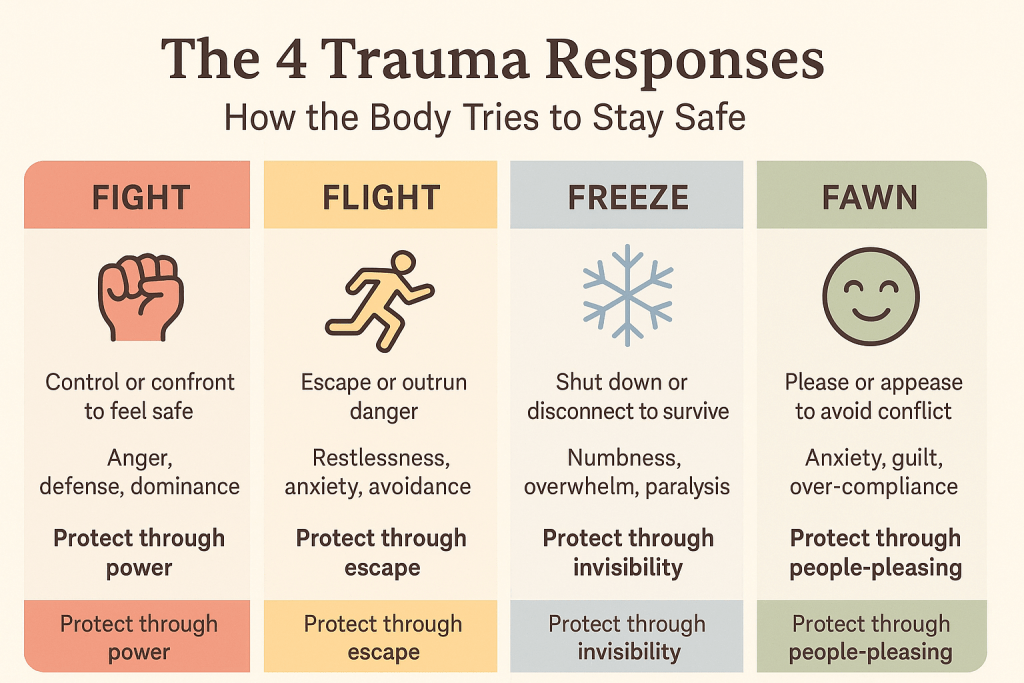
Fight, Flight, Freeze, Fawn
I’m participating in a therapeutic group. It is for women fifty and up who have experienced trauma in their lives. It’s a room full of PTSD and c-PTSD. I’m impressed I went – I wouldn’t have five years ago. I would’ve been too uncomfortable. I’d have struggled with imposter syndrome, and the anxiety and feelings of comparison would’ve pushed the buttons of my eating disorder recovery.
Timing is important. Timing is important, but not everything. I used to wait to start working on my eating disorder recovery because the time wasn’t right. Sometimes, you just have to start. Feeling ready comes later.
I gave myself huge props for attending this group on the first day, and it was both annoying (ego) and comforting to hear that others struggled with showing up, too.
It’s an informational group rather than a relational one. We’re learning about trauma and what it does, and how it informs us and changes us, rather than sitting in a group sharing anecdotes. It’s more university lecture than love in, which is right up my alley. The former, that is.
I knew about the human “fight or flight” response to a perceived threat, the one that prepares us to either confront (fight) or escape (flee) by surging our adrenaline, increasing our heart rate, and prepping our muscles.
I was also aware of the body’s tendency to freeze in the face of threat. My instincts are a big fan of freezing, for all that I like to imagine myself as a Sarah Connor – Ellen Ripley cross. I’d blame myself for that except that the responses we choose depend on our trauma. The younger you were, the more likely you are to prioritize behaviours that aren’t fight or flight.
I was unaware of the fawning response. I liked things better when I was unaware of fawning. The more I learn about the fawn response, the more I feel personally attacked. I’ve never aspired to obsequiousness, and I’m irked to discover it’s been thrust upon me.
The truth, however, shall set you free, even if it pisses you off in the interim. Despite my protests, I’m well aware of my tendency to do anything to ameliorate tension and potential conflict. At least until I lose my temper. Perhaps my version can be called “fawn or freak out.”
“I didn’t experience my value or worth in safe and nurturing environments, so my body learned to fawn, trying to keep other people happy or in appreciation of me, in order to prove myself worthy or valuable.”
Ingrid Clayton, PhD
Fawning, which has nothing to do with Faline
“The term, “Fawning” was coined by Pete Walker, a psychotherapist who specializes in complex trauma. Walker saw fawning as the fourth “F” of trauma responses: Fight, Flight, Freeze and Fawn. It was particularly common for people who had, or were experiencing, long-term, relational trauma.
Walker describes fawning as “a response to a threat by becoming more appealing to the threat,” a mirroring or merging with others’ desires or expectations in order to diffuse conflict and find safety. We surrender our boundaries and lack assertiveness when we are fawning. We over accommodate, appease and submit to the very person or people who have harmed us.
While fawning is meant to neutralize danger, it also causes us to abandon our own needs, thereby reinforcing our wounds.”
I used to think of myself as a doormat on steroids. When I was being charitable, I’d think about myself as a reed, bending with the wind, or in this case, to other people’s demands. It’s not a comfortable behaviour, constant acquiescence. It doesn’t feel good on the inside, abandoning yourself just to placate people into peace.
Fawning makes me tense. It’s anxiety-provoking. What if it doesn’t work? What if the situation doesn’t calm down?
There is, for me, also, underneath the fawning, anger with a side of resentment. Suppressing those feelings is what leads to the periodic, reactive explosions experienced by those of us who subsume our thoughts and feelings to make other people feel okay. One can only suppress so much for so long before the pressure builds to a point where it needs releasing.
Just remember: Your nervous system doesn’t pick a response to mess with you. It decides on fight, flight, freeze, or fawn based on the situation you’re in and what you can actually do about it.
When I’m fawing, I’m also hyper-alert. I’m perceiving much, and filtering it all through my trained trauma responses. It’s a habitual behaviour. I’m working hard on multiple levels to make sure things stay smooth and serene, and this behaviour is both constant and tiring. I manage other people’s distress. I manage other people’s anger. Conflict is not an option.
“What do you imagine would happen?” is a question my counsellor often asks.
“Bad things,” my inside voice replies. Of course, my inside voice is a liar. The trick is learning to believe that.
“Although it appears like we are agreeable, it’s important to understand this as a mask for the terror that lies beneath. True self-expression is trapped, or only allowed in small doses that don’t rock the boat. Finding safety in a predatory relationship is always the priority, trumping self-esteem, self-care, honoring ourselves as separate beings in any way.
Ingride Clayton, PhD”
This malleability of my persona resulted in me feeling quite unreal. Does a mirror have a personality of its own? I had no sense of self. I had no centre. Everything about me was dependent on and in relation to other people.
That does not feel great.
I don’t have favourite things. I don’t have passions or hobbies. I occasionally obsess – hello, Squishmellows – but it’s a transitory thing. Much of this can be blamed on my eating disorder, but it’s also the result of trauma. You can’t have favourites or time of your own if fawning is part of your operating system. It’s difficult to know what you like or dislike when you change your stated opinion based on the emotional temperature of the room.
It’s not great to live life with an external locus of control. Fawning meant I always felt like other people were in charge of me, even though I was creating that situation with my behaviour. I felt like a leaf on the water, at the whim of forces outside my control.
We are not meant to be reeds, as it happens.
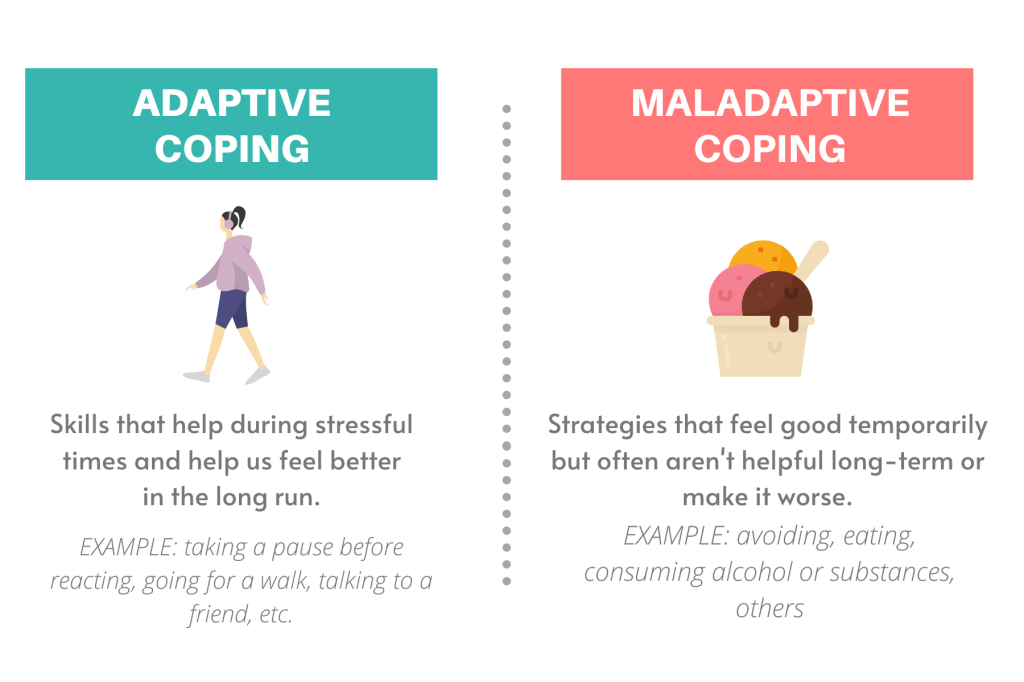
My self-talk used to be quite vicious when it came to this pathological adaptability, but I’m getting better with that. Talk nicely to yourself. Be kind to yourself about the behaviours you engaged in that helped you survive. Be kind to yourself because life is hard, so why not?
It’s okay to appreciate – and even be grateful – look how clever you were to figure out something that would keep you safe – for these behaviours, even as you work to change and release them.
They served you once. It’s okay to let them go now that they don’t.
Characteristics and causes of fawning behaviour
- You prioritize peace over everything else, even (especially) your own needs, to maintain harmony in the outside world (even as it creates conflict and turmoil within)
- You struggle to say no: you take on too much, or do things you don’t want to do because we lean into appeasement.
- You’re constantly seeking validation from other people to prove you’re worthy of acceptance (earn your air); you don’t believe you have any inherent value.
- You feel like you’re betraying yourself by not being true to your beliefs and values. You remain silent on things that are important to you to keep the peace, and then feel diminished.
- You feel responsible when other people have reactions or get upset, even if you had nothing to do with it.
- You start with people-pleasing as soon as tension enters the situation, to defuse or mitigate.
- You experienced trauma at a young age when you had limited resources and ways to deal with difficult, dangerous, and traumatic situations. When threats come at a young age, there are really only two responses available: freeze or fawn. There’s not much else a child can do against an adult. There are limited ways to respond to those responsible for your survival.
- It was the response that worked best to defuse the situation. Your nervous system is an adaptability engine. It chooses the behaviours that best support survival. It learns to avoid responses that make the situation worse.
- The circumstances of the trauma impact the development of the trauma response. A single event is processed differently from a chronic situation. When trauma is chronic, the behaviour stops being a response and becomes a personality. The trauma adoption starts to feel like who you are. Behaviours like people-pleasing and shutting down feel like flaws, but they’re how you survived these traumatic circumstances.

Breaking free of the fawn response
I’m only just starting to work on this. Boundaries have been my focus for the longest time. I had none, so growing some and learning to maintain and defend them was a big part of my early eating disorder recovery. Saying “no” is no small thing when you’ve a history of conceding.
Practicing boundaries is no small thing when you’ve made “nice” a big part of your personality.
I still tend to collapse into pleasing in the face of opposition. I still tend to give in, give way, and give up if it seems like there might be conflict in the offing. There are, however, options beyond shutdown and retreat. We can teach our body that it’s safe to hold ground. We can move away from fawning when faced with the possibility of conflict. We learn that not all conflicts represent a real threat.
I don’t have to freeze or fawn when I get into a disagreement at the grocery store, for example.
The fawn response is habitual and ingrained, but you can change it. It takes practice. It’s hard. I like myself better, however, when I maintain my spine.
Some things that can help ameliorate the fawn response (in addition to working on your originating traumas):
- Take a beat before taking action. It’s okay to wait to react. Trauma steals our choices. Take back your agency. You don’t have to drift into fawning just because there’s stress and distress. You can survive uncomfortable feelings.
- Get back into your body. Fawning often comes with dissociation. Take a deep breath. Relax your muscles. Focus your thoughts on what’s in front of you. Touch things. Have a sip of water. We can survive discomfort.
- Don’t say “yes” to things from a place of fear. Make sure you like what you’re agreeing to. It’s okay to disagree with other people. It doesn’t make you a bad person. It doesn’t make you wrong.
- Practice saying “no.” Start small. Choose things that feel easy. Try not to feel confrontational, which can happen when people first start practicing boundaries. Notice when you feel resentment – this is a pretty good cue that a boundary is being crossed.
- You don’t owe anyone an explanation for your refusal: “No” is a complete sentence.
- You don’t have to earn love by abandoning yourself. Fawning kept you safe, but it’s okay to let it go now that your reality is different.
- It gets easier with repetition. Practice.

- There is much bureaucracy after someone dies, and having to deal with it starts pretty immediately. Death comes with work. If you get to choose, I would recommend not being the oldest daughter. ↩︎
- I also cooked most of the Christmas dinner that my father decided to host. Fourteen people, but “it’s not that complicated,” said the man who’d never cooked a big dinner alone. On the bright side, I’ve now successfully cooked a prime rib roast dinner with various sides. ↩︎
 From Famine to Feast
Well, you may have stepped back from posting regularly, but you more than made it up with an epically long post to kickoff 2026!
You know I hate talking politics, so all I’ll say is that the state of the US right now leaves a pit in my stomach. I try to focus my attention more locally, but our president is attacking our city too. 🫣
When it comes to uncomfortable emotions (grief, hurt, sadness, etc.), I tend to distance myself from them as quickly as possible. I feel out of control when I’m feeling any of those emotions, which I do not like. So, I tend to talk in the past tense as soon as I can, in order to intellectualize the feelings. I had no idea there was a term for this. But, of course there is. There is a term for everything.
I think that we’ve talked about fight or flight in the past, and I’ve admitted that in the majority of situations, I am a fighter. I stand my ground. I say my piece. Even when I’m scared shitless. I put on a brave face, change my posture, raise my voice, and spit out words. That said, at work, I used to be a fighter, until I was traumatized by a high-up manager 4-1/2 years ago. Now, I am definitely more of a fawner at work. Frankly, it’s safer. That said, I do not delude myself into believing the tenuous “peace“ that I’ve created or maintained. I am always waiting for the other shoe to drop. So, once again, depending on the situation, I have different personalities. I don’t necessarily love that, but my rational brain understands why it is, and why it has to be.
I am sorry that this time of year is sullied by the passing of your mom two years ago. Sending you love, light, and strength to keep on keeping on. As you know, I completely understand what you’re feeling and going through.
On the mixed news side of things, the probate of my mom‘s estate closed on December 30. While the timing of it was pretty excellent, it feels like another goodbye. I am hanging in there, though—my son flies in tonight from Oklahoma, and will be staying for a week. We will be celebrating our family Christmas on Saturday with my grandson, and my husband‘s 57th birthday on Sunday. I am looking forward to having a lot of celebratory family time. It’s deeply needed right now.
LikeLiked by 1 person
I was going to include a “long post” tag, but I decided this was a case of caveat emptor lol.
I worry about my friends in the States. Stay safe.
There really is a term for everything. Perhaps when we look to the defining quality of the human species, it should be “labellers.”
I’m sorry that happened to you at work. Bullies and abusers are the worst. It’s quite awful, feeling on tenterhooks in situations you’re required to participate in. Who we truly are does have to be balanced against the realities of the particular situation. I realized that when I started having to communicate with the kids’ teachers and administrators. Honey worked better, than my rage, righteous indignation.
It’s funny how death isn’t one and done. There are many small endings to contend with. I found filing that last tax return surprisingly difficult. I’m glad you have family around for this one.
What a fun-sounding, family-full celebration. Enjoy. Christmas with littles is wonderful to watch. Big hugs.
LikeLiked by 1 person
I think the neverending series of small goodbyes has been the most gut-wrenching part of it for me. I know you’re barely ahead of me on the same track, so we’re both going through it. I just filed the last tax return a couple weeks ago. Surprisingly, that one didn’t hit me hard at all. It really is strange the things that gut me and the (expected) things that don’t. This sntire experience has been surprising. And, generally, I’m not a fan of being surprised, so you can imagine how well I’m handling it. 🤣
LikeLike
This really touched me on so many levels. Reading about the loss of your mom felt especially close to home, because so much of what you shared mirrors my experience with my dad. By the way, we both lost a parent in 2024- I didn’t realize that until now.
The way you connect grief, survival, and fawning helps me see those patterns with more compassion. Your honesty here always makes me feel less alone. Thank you, my friend.
LikeLiked by 1 person
Thank you. I appreciate your comments so much.
LikeLiked by 1 person
I really appreciate your comments on my blog and your posts too, Michelle. 💜
LikeLike