Sliding and self-sabotage
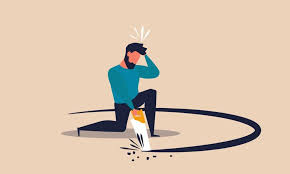
The good behaviours drift away slowly, quiet-like so you don’t notice, so the alarms don’t ring.
What is this tendency we have towards shooting ourselves in the foot? I know this isn’t just a me thing. I’m often surprised our species survives.
Self-sabotage is especially true of new and improved behaviours. They’re harder to hang onto in times of stress. It’s when times get tough that old habits and routines become tempting. This is why people go back to smoking when things get challenging – or even mildly stressful, we’re good at justifications.
I didn’t falter, not with my smoking quit and not with my eating disorder recovery, but I’m not doing as well as I’d like either.
We could more accurately rephrase to, “I didn’t falter yet, but I’m not travelling in a good direction.” The final fall is just the last step in a long line of bad decisions, after all.
Are you struggling this holiday season?
The lies we tell ourselves
It’s funny how determined I am to ignore it when I’m finding life hard. I play pretend. I’m currently pretending I’m not eating a lot of rice these days. Eating rice-based meals would be okay if I included other ingredients and wasn’t simultaneously dealing with a generalized food revulsion and a noisy inside voice suddenly quite concerned with the flab on my middle, but unfortunately, I’m ‘suddenly’ fighting the eating disorder on multiple fronts.
It’s been a minute. I’m out of practice.
I told myself it was fine to periodically indulge in quirky food behaviour. And by that, I mean indulging in some of the habits I picked up along the road with my eating disorder. Habits like dinners of only steamed vegetables with Parmesan for the protein – it’s insufficient. Habits like mono-food meals of only rice, only pasta, or only salad. With hot sauce, of course. I’m not a savage.
Or like counting a handful of almonds as my daily protein supply in a diet that’s been reduced to mostly white carbs. I was undercounting the number of nuts in my handfuls as well. I figured I was grabbing twenty or so – still far too low for a day’s worth of protein – but I counted recently, and my handful is half that. That’s a significant difference when it comes to protein and calories.
Mono-food meals and hot sauce
People with eating disorders often gravitate to mono-food meal diets, and we use a lot of hot sauce as well. It fights hunger. We also snack on candy, though only a piece or two at a time. That little bit of sugar kills the appetite. See also: gum. These are things you can look for if there’s someone in your life who’s giving you eating disorder concerns.
You can also ask. Someone without issues will respond calmly. I never managed that when I was struggling. I interpreted queries as attacks and fought back. Another warning sign to pay attention to. Early intervention is best if it can be managed.
And if I thought that adding an occasional scoop of cottage cheese to my rice bowls (bowls with rice in them) was positive enough to keep the risk of relapse at bay, the uptick in negative self-talk has dispelled me of that delusion.
My recent discussion with my counsellor forced me to face the level of food delusion I’ve been engaging in. Sharing is caring, and it also helps people avoid relapse.
Of course, just as one substitutes better behaviours for harmful ones in recovery, one can also substitute harmful behaviours for thoughts and feelings you don’t want to be having. Avoidance is a way of dealing with uncomfortable issues. It’s not a good choice, but it happens.
Hating my body is familiar and easy, and it feels more appealing than thinking about the death of my mom.
What’s your favourite avoidance behaviour?
Grief and the holidays
The firsts after someone dies are hard. This Christmas holiday season is proving that truth in spades. I don’t want to think about Christmas without my mother. I don’t want to have Christmas without my mother.
My mom loved Christmas. She loved the decorating, the cooking, the family time, the giving of presents, and the snow. And she won’t be here this year. She won’t be here ever again. That’s a hard thing to know.
No more of mom’s trifle, no more of the annual losing of gifts she’s bought for people over the year, and no more “apple, maybe, walnut, I don’t think so” cake. The inside jokes die as well.
The reappearance of December is also a reminder that last December was a hard one. My mom died at the beginning of January, and that whole last month was difficult. My mother had lung cancer, and she got small and frail quickly once she stopped treatment.
I knew the end was closing in when I looked at her, and that’s hard.
Dealing with that knowledge while holding space for my mom to talk about death and for my dad to talk about how she was maybe doing okay took a lot. I haven’t thought about last December much. Looks like I’ve run out of time.
Treat the wounds, don’t ignore them
The good thing about acknowledging what it is that’s causing us pain is that we no longer have to work so hard to keep ahead of it. We no longer have to scramble to avoid the truth. It’s arrived.
The annoying thing is that facing what we fear almost never kills us. Maybe that one time, but the ‘almost never’ makes me feel somewhat shamefaced about my attempts to avoid my grief by playing a bit fast and loose with my recovery.
No one was more thrilled with my progress in eating disorder recovery than my mom.
This is where we remember to give ourselves grace. Old habits are like ex-boyfriends. Even when part of you knows it’s a bad idea, the familiar feels tempting.
It’s important to remember that you ended things for good reasons.
It’s the staircase again
Where do I go from here, after working on giving myself grace? Self-compassion is good, but I still have to improve my situation. I’m not in the basement, but I’ve definitely dropped a few steps. And some of those steps are quite miserable.
The way back isn’t a mystery. The path away from relapse is always the same. You take it one step at a time, and with realistic expectations. It’s no good saying you understand the demands that special circumstances like grief create in us if you don’t accommodate them. Pay attention to how much you have in the tank and to what’s going on in your life.
I’ve multiple irons in the fire to consider. There’s relapse prevention, there’s grief, and depression is working hard to kick my ass. Nothing seems appealing in this life save for negative self-talk and rage. If you’re looking for demotivation, depression’s your girl. Depression doesn’t know what it wants.
This is why you don’t wait to fight back until you feel like it. This is why you don’t wait to correct your course and fight your demons. You never want to fight back when you need to. Do first. Engage with life first. Get back on track first. Worry about wanting to later.
Desire mostly comes of its own accord as behaviours improve anyhow.
What’s hurting you, and what are you going to do about it?
Further reading
“Self-sabotaging: what it is, causes, and how to stop.”
 From Famine to Feast
None of this is a surprise. You knew it was likely coming, and it has. You’re acknowledging it by writing about it and divulging your struggles to your therapist—you’re not too far down the staircase at all. You will get through this—even if it isn’t pretty, easy, or fun. Hang in there—I’m thinking of you. 💕
LikeLiked by 1 person
Thank you. I think in the back of my mind I had this sense that knowing meant mitigation. How annoying that action is sometimes required.
I’m thinking of you this holiday season as well ❤️
LikeLiked by 1 person
💕
LikeLike
we hear deep grief and a need for mourning the loss of your mom and all the accompanying voids. We hear depression and a strategy of ED behavior (and general self-sabotage) to meet the need. We hear recognition that self-sabotaging behavior is not meeting that need or the need for self-care.
We have tears welling up because we feel relief that you see how violence against you does not meet your needs.
Are you open to considering that self-sabotaging behaviors are what people are socialized to do? Our language about applying self-care is itself violent: (“This is why you don’t wait to fight back until you feel like it. This is why you don’t wait to correct your course and fight your demons. You never want to fight back when you need to. ).
What if continuing to view it as a fight keeps it violent? We are not suggesting it’s only a language issue. We are suggesting that changing the language to non-violence and then engaging in non-violent behaviors is a movement toward liberation from our always-violent society.
Moving away from that violence, when every institution reinforces it, will take concerted effort, support, community, and mourning and love, and tenderness and vulnerability.
We understand why avoiding that would be easier than giving love to ourselves. Why self-sabotage is easier than self-love. It’s what we’ve been trained to do every day.
How does this land?
LikeLike
As I was reading the paragraph on the violence in self-care language, I was reminded of an episode of Star Trek: TNG in which the best “resistance” to a violent attack was to calm the self and relax.
I remember too books I’ve read telling us to be kind to ourselves as we recovery, even to giving ourselves gentle self-massage. I’ve always been resistant to that gentleness. I need to perhaps poke at that some more.
I think the suggestion that I’m socialized to harshness is a good one. This all lands well. I was going to get harsh about my tendency to forget NVC and gentleness when I reread the last line – “it’s what we’ve been trained to do every day.”
LikeLiked by 1 person
We wish you freedom from socialized violence and for endless supplies of love
LikeLiked by 1 person
I appreciate that very much
LikeLiked by 1 person