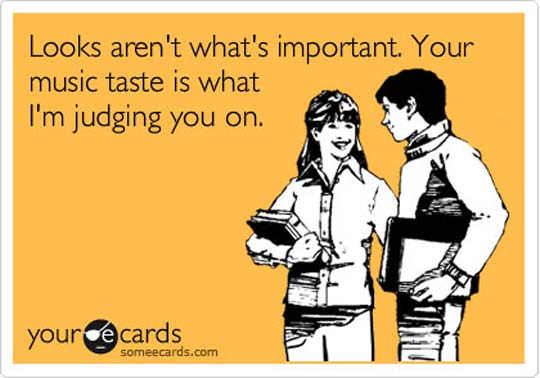
I’m a comparative individual. I compare myself with others constantly. Both my mother and grandmother were judgmental people, commenting on others across nearly all metrics, on everything from appearance to behaviour to employment to belief systems. And although my mother did it to a lesser degree and with more grace than my grandmother, hearing others being judged and fond wanting on a regular basis takes a toll.
I tend that way myself, though I’m more aware of the behaviour than my mother was – she was resistant to any suggestion that it was a thing – and I fight it with respect to other people as best I can. I turn all that judgment inward instead where I’m less diligent about treating myself with compassion and grace. I think that’s an unfortunate truth for too many of us.
I’ve had a lot going on since 2020, not including the global pandemic. There’s been a lot of trauma, and a lot of negative emotional experiences. It all takes a toll, and yet, I’m hard on myself for not feeling “with it,” and bouncy, and loaded with enthusiasm twenty-four-seven, notwithstanding that my mental and chronic illnesses mean that those adjectives rarely fully apply.
And currently, on top of everything else, I ache. By body hurts, and by body I mean my spine and pelvis, and the pain, pins, and needles, are making things unpleasant. I wish mental withdrawal and escape wasn’t my first line of defense – it rarely goes well, and then you’re stuck with remedial work to get yourself back to awful.
People say it takes a month to turn a new behaviour into a habit, but based on how quickly I abandon the new and healthy patterns of recovery at first blush when I’m in distress, I’d argue that it takes significantly longer to burn them in. I think that month guideline applies only as long as the new behaviour remains unchallenged and unthreatened.
We like our safe spaces.
Without the scaffolding that comes with planned behaviour, I drift of course quickly. That I can ‘wing it’ is one of the lies I tell myself on the regular. I’m usually aware it’s happening, that I’m lying and denying, an improvement on days of old when denial was my favourite spice.
Sometimes, I let the course drift play out – that rarely ends well. I tell myself it’s just the undiscovered country, but really, it’s akin to taking a ‘wait and see’ approach to basement flooding. And so, here we are, once again, creating structures to support a smoothly running life as I float around in my inflatable kayak. The rigid ones are heavy.
Part of that structure is going to be a return to a more scheduled approach to blogging. I feel better when I have a sense that I’m being productive.
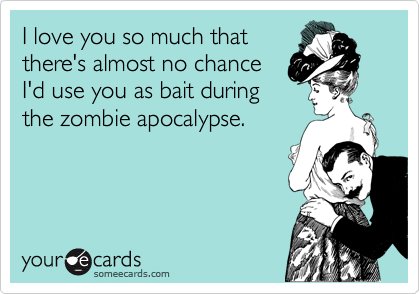
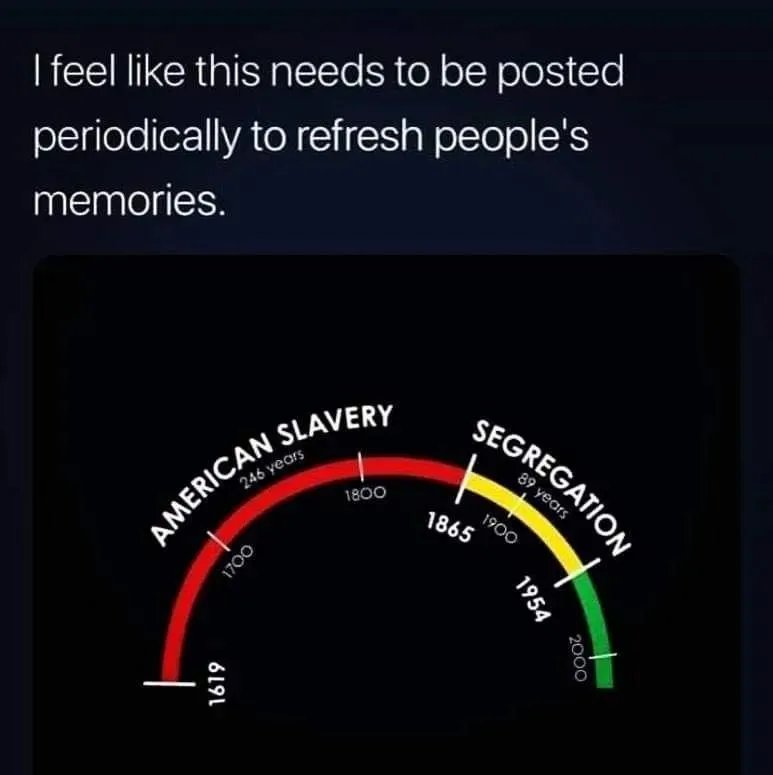
And all of this is a lot of words to say, “here are some memes.”









 From Famine to Feast
Thanks for sharing this idea Anita
LikeLiked by 1 person
Thanks for reading.
LikeLiked by 1 person
We hear that you wish it took only a month for new habits to become permanent
You may not be excited about this: “remedial work to get yourself back to awful.”
We also hear your plan to blog more regularly. Meet your need for movement, order
LikeLiked by 1 person
Inertia isn’t good for anyone for too long. Maybe if one is at the beach, though even then, I get antsy. No pun.
I hope things are well 💜
LikeLiked by 1 person
When we visualize calm and peace, sometimes it’s on a Florida Gulf beach looking into the water.
In grad school we went with Spouse. On the beach, we were intending to read an entire novel for class because we had a test after spring break. We never got beyond reading the back cover and the first page. Still got 100/100 on the essay for making shit up about post-colonial hegemonies, etc.
We had acid reflux and felt miserable for a few days. Have felt very depressed. We feel detached. We are trying to engage with NVC, and that offers us some pathways to considering getting needs met.
How’s body pain? How’s grief? How’s the unpacking and fixing house? How else are you feeling?
LikeLiked by 1 person
I am ruminating over my counsellors reactions to my decision not to sell my house. She is disappointed. Or that is my interpretation. I did not, of course, ask.
I am frustrated with body pain, with pins and needles and reduced mobility.
I have told my neighbours I am cancelling moving. I am a quiet neighbour. I try not to intrude on others. I have a nice garden. But still, I was surprised people were upset that I was leaving the neighbourhood. I have been so gratified by the expressions of happiness that I’m not moving. This is so unexpected, and feels so nice.
LikeLiked by 1 person
You sound tired from spinning counselor’s reaction to staying in your house, especially since you suspect and don’t know for certain she seemed disappointed.
You sound surprised and joyous at neighbors’ reaction to your staying. You presumed they appreciated your quietness and well kept garden. Now you maybe have met needs to be seen, accepted, celebrated.
We were drinking mylanta cuz it numbs the esophagus some. Last two days all the mucus that mobilized to protect the esophagus had decided to move into the light lol. Condition much improved. We feel relief. Suicidal ideation spiked, depression still is high, though we are not motivated to violence.
Making food we enjoy helps mood temporarily (the eating enjoyment part). We like spice to spice up life and couldn’t eat it for a few days with the acid. So hot peppers were used tonight (not for Spouse, who thinks black pepper is spicy)
Feeling very lonely even with people. Unmet needs for connection. Asked Spouse to share more feelings tonight. Hope that strategy meets some needs 😭
Thank you for seeing us
LikeLiked by 1 person
I very much enjoy spicy food as well. I rotate with the sauces – I’m currently in a Frank’s Red Hot phase having a last finished the hot sauce my son bought me a few years back. It came in a skull lol.
When I was a child, I quite liked it if I had a stomach complaint and mom would give my Mylanta or milk of magnesia. I liked the taste. I’m glad your reflux is improving.
I find ideation to be quite a tidal behaviour, with ebbs and flows.
I hear the loneliness. I feel the unmet need for connection. I hope conversation with Spouse went well.
One of the things I like(d) about being an inpatient is that there is an opportunity for connection with people who “get” you. They share or relate to our pathologies. The inability to find that often in the “real” world makes me lonely.
I find that my reality is “too much” for my friends some times. My mother was my only ear outside here and counselling.
💜
LikeLiked by 1 person
Haven’t tried Frank’s. We tend to cut up hot peppers or sprinkle cayenne powder. Maybe we will try sauce
Skull sauce, mmmm
We also observed that in-patient facilitated connection. Those friendships didn’t last for us outside hospital. We drifted apart from the married ones—maybe we felt uncomfortable or confused in a relationship that was very emotionally intimate during in-patient.
How do we maintain that level of connection when Spouses exist? And we don’t excel at small talk friendships. One person just struggled to reply electronically or appear in-person. We need presence and so chose to let that friendship go. Another was busy with career and family. And then there are the suicides.
We did have to meet needs for space from people in hospital who wanted to be closer than we felt comfortable with.
We hear your mourning for your mother’s understanding and acceptance and her seeing you.
We observe unmet needs for shared reality and mutuality with most people we know in-person most of the time. Exceptions exist and we feel gratitude for them.
Had big storms here this weekend. Middle of night event. Lost power for 7+ hours. Trees down around town (none of ours). Felt scared and then worried about power and fridge/freezer food and felt tired. Younger Child’s dog didn’t enjoy it either.
LikeLike
In-patient friendships didn’t last for me either. I don’t think they’re really supposed to. It’s trauma bonding, to an extent. And, as mentioned, the people we meet in treatment have an unfortunate tendency to die/kill themselves.
Friendship maintenance is hard. I find it hard even without the built-in companion of Spouse. Part of the issue for me is the stories my brain tells me about other people as soon as they’re gone from my reality – much negative self-talk.
On the one hand, I’m grateful others don’t have my reality, but it does create “unmet need.” I’m also grateful for exceptions.
I’m sorry the storms were upsetting and damaging. I read a story about storms in Canada back east today – Ontario – remnants from those experiences in the States. It looks severe in all locations. I’ve never experienced that kind of storm – we don’t grow them here.
LikeLiked by 1 person
What does your brain tell you once people are gone from your reality, if you care to elaborate?
We don’t care enough about sports or music or news or really anything to get together with people to hear their judgments. We hope once we are able to translate judgments into feelings and needs quickly in our brain that we will feel less fear and more interest in human conversations.
LikeLiked by 1 person
I don’t know that I consider opinions ‘judgments,” especially since they can be fluid. But I do like to keep social group interactions on a superficial level. One doesn’t always want to be the oddity. I’m more “real” in smaller groups. Depending.
I lack object permanence in my relationships with people. Dead is an easier absence for my brain to process. When people leave, after a visit or whatever, I can very quickly dissociate the relationship into something problematic. This makes it all about me, which I hate, but there we go.
I assume I haven’t heard more, again, sooner because I said or did something, because they hate me, because people eventually leave those of us with mental illness. Then, I’ll get angry at them for their imagined behaviours. Then, I talk myself down – things are fine. Rinse and repeat.
I think about talking about it with my friends and family sometimes, but this behaviour is fully a me thing.
I don’t feel it with my son, but the trust in that relationship is solid, and that’s not true of most of my in-person relationships, actually.
It’s a form of attachment disorder, a result of trauma, but also a lack of physical touch during the first six months because of a body cast.
LikeLiked by 1 person
We don’t notice feeling discomfort at preferences people voice that aren’t judgments, even if we don’t share that preference: (i love her music! I dislike the chicken at the new restaurant. I hope she wins the election.). These are preferences owned by the speaker. We met our needs for understanding and safety.
We observe most opinions we encounter sounds to us like judgments (her music is the best. The chicken at the new restaurant is terrible. Biden is an oratorial genius.).
We interpret declarative sentences that define something subjective as objectively true (the food is wonderful) to be judgments. In our reality, the food can’t be wonderful. You can have an experience, you can feel joy eating it, you can like the food. It can’t be good/bad/mediocre. These judgments take individual feelings and preferences and generalize them in a way that we fear negates other’s ability to have a different personal experience.
We feel fearful when we hear these judgments because we don’t want to hear judgments about us: you are smart, you are lazy, you are bad.
We spend time trying to translate these in our head as a way of honoring our fear: they feel pleased with our idea, they would prefer we helped them move tomorrow instead of resting, they feel dismayed that we raised our voice.
Feelings lead us to more understanding and compassion and potentially connection. And feelings lead us to needs—and need fulfillment can make life something we enjoy more than with unmet needs.
Do you understand how we’re defining judgments? Is this the same as or different from how you define opinions?
We practice every day. We hope to become able to translate everything we hear quickly into feelings and needs. This might meet our needs for understanding and mutuality and empathy and compassion and connection and safety and stability and order.
We hear your concern with creating stories about people and how you imagine our dissociate that they feel about you once an in-person visitor leaves. We hear confusion and that there’s more ease with death than absence. Is that what you intended?
LikeLiked by 1 person
I also interpret opinion as judgment often, and this is a good reminder that I can misjudge that. Reframing it as NVC does is also a good way and it seems to put more balance in the communication relationships – not all on any one party.
This definition is more thoughtful and nuanced. I do better when I sub in the phrase “point of view.”
The explanation provides a lot of clarity. There is opinion and judgment, and then analysis, and a translation to an emotional state, which can lead to better communication and connection and the ability to meet needs.
Is this right?
This is a much larger use of the word than I allow when I say “judgment,” This is more what I am trying to achieve when I relabel something as “point of view.” That seems like softer language.
Practice is important. I didn’t think it was, but I’m much better at boundaries now for the practice counsellors insisted I do. Practice and repetition. It’s annoying that it works.
Yes, death is an easier relationship for me (besides the grief), and I don’t know that it confuses me, so much as it worries me a bit. What kind of person finds the dead easier?
And though I dissociate into scenarios that are often violent and include harm and death, I don’t ever include the deceased. How interesting.
LikeLiked by 1 person
“What kind of person finds death easier?”
One who seeks clarity, maybe also ease in interpreting relationships. We have no judgment of this recognition by you. We receive the information as a gift of what you observed about yourself. We feel pleased at meeting our needs to know you and for authenticity.
“There is opinion and judgment, and then analysis, and a translation to an emotional state, which can lead to better communication and connection and the ability to meet needs.
Is this right?”
Yes, regardless of what the initial stimulus is (judgment, observation without judgment, evaluation), we try to notice the emotions alive in us.
Emotions are seen in NVC as indicators of the metness of our needs. We find the need. If it’s unmet, we can look for strategies to meet it and make requests that value everyone’s needs.
We can guess at other’s needs, too. This step is often necessary to get to empathy and compassion and understanding and connection in situations during which we observe conflict or tension.
We observed that Practice and repetition of new skills can change our patterns! One key for us is to practice when we are within our window of tolerance (ie have spoons or fucks-to-give). If we try to practice new coping skills only when we’re already panicked, the new habit doesn’t seem to be accessible. Do you notice that for you?
LikeLiked by 1 person
I notice this in regard to spoons. I also notice a tendency to overestimate spoons, especially when I’m depleted. Do you find this – the worse things get mentally, the less competent i feel, and the more I overcompensate?
I feel gratified I interpreted correctly. I’m HSP – I place significant value on non-verbals. Online is harder for me. I’m more aware of my neurodivergence here.
Thank you for suggesting clarity and ease of interpretation. I think that’s a significant part. Ambiguity in relationships can be difficult for me. Death is not ambiguous.
LikeLiked by 1 person
Can you explain how you overcompensate?
In Depletion, we can feel helpless and have unmet needs for competence. Our response to meet those needs is to retreat into a shell and try not to do anything. Or young us’s come out and might result in outside others supporting/parenting them.
We can miss nonverbals because we feel shy or scared to look at people.
People who communicate nonviolently maybe can reduce our need to read nonverbal cues because NVC people try to tell you how they feel and what they need so that there’s less to interpret and, theoretically, less for us to feel afraid of.
When we speak NVC and the other doesn’t, we think nonverbals would help us to guess at their feelings and needs. Someone inside knows nonverbal cues and used to teach about it sometimes.
We think we understand the ambiguity concern with relationships. Our strategy for managing this lack of stability was similar to our depletion strategy: we have eliminated many relationships. And we’re back to the dead people, who also contributed their choice to our dwindling friend base.
LikeLiked by 1 person
When I’m overcompensating, I’m ignoring the reality of my limited strength and mental capacity. I take on too much, even when I know I shouldn’t, commit to too many other people, too many things in any one day.
Then, I start to feel awful because I lack the mental and physical resources. So I get mad at myself for the “failure” of my habitual choices, and historically, push on regardless of the harm.
We can’t simply change our minds and our direction, though that is fine for other people lol
I like the clarity of NVC very much. I take in a lot of information, and for many people, their nonverbals and verbals are in conflict often. I find this difficult to deal with especially since I react most strongly to the nonverbal – the ‘hidden’ angers and sadnesses, for instance.
I think it’s interesting and helpful that nonverbal cue appreciation has been specialized with those inside. It would be helpful and protective to not always feel the weight of other people’s feeling and emotions, especially when one is dealing with so many other things.
I find that relationships with neurotypicals require much adjustment on our part. It’s funny – they probably think the majority of accommodations stem from themselves. This is the joy of relationships with people living in the same kinds of realities. But, as you mentioned, those relationships are often full of dead people.
I understand the strategy to withdraw – I do it myself. But now, I’m here, with a small world. It makes me sad sometimes. I appreciate the friendships like this one that I make online.
LikeLike
We noticed you changed your avatar. Is it a classic vehicle?
LikeLiked by 1 person
It is, but not roadworthy. It’s from a vacation about ten years ago now. It is a display sitting outside a minigolf park. It was so hot, we quit after eight holes.
LikeLike
We seem to recall that one of the goals of our communication is to receive everything from everyone as a gift; that is, no matter what language someone is using, we personally can look for the underlying feelings and needs and meet our personal needs for understanding information empathy compassion, etc., whether or not we are able to share or connect with someone else
That is a strategy that we feel hopeful could lead to more safety and stability met needs for us
LikeLiked by 1 person
That is a very open and expansive philosophy. It seems like it allows for the greatest amount of information about an interaction.
More safety and stability would seem like a more reasonable outcome with more information.
I am reminded again that grace is a quality I associate with the behaviours you choose.
LikeLiked by 1 person
I’m sorry about the reflux. It sucks. Do you use medications, or ginger? My mom had GERD for years.
I find the detachment of depression especially frustrating. I’m sorry it’s so strong.
LikeLiked by 1 person
I feel like I’m bopping around in an inflatable canoe myself. Bumper canoes? Structure will inevitably return, but it’s been mostly absent the past couple of months. I’m sure I could stand cracking the whip on myself a bit more, but the devil on my shoulder whispers that I need to be less rigid. 🤷🏼♀️
I STILL love those Victorian eCards!
LikeLiked by 1 person
“We like our safe spaces.” – sounds like the meta-metaphor for your life right now – here’s hoping that things turn out for the best.
(I suffer from chronic migraine, so it has taken me a long time to be brave enough to leave inertia behind and get moving – but doing so has helped me heal).
Linda xx
LikeLiked by 1 person
Thank you.
And thank you for the encouragement – this morning is day one of changing things up, adding more structure and routine.
LikeLiked by 1 person
I’ll send lots of positive vibes your way 🥰
LikeLiked by 1 person
It’s hard making change. I like that you have a plan and hope that you will give yourself lots of grace as your plan unfolds. 🩷
LikeLiked by 1 person
Thank you. It is hard to make change, especially when that first brush of enthusiasm starts to wane. A reminder to have grace is timely, and appreciated.
LikeLiked by 1 person
❤️
LikeLike