
Chocolate and my eating disorder
An eating disorder will eventually convince you that everything bar iceberg lettuce is fattening and therefore evil, but the first things to get placed on the chopping block are candies and sweets.
How can you possibly think about eating chocolate when you’re so obviously, desperately in need of weight loss? In fact, now that you think about it, every chocolate you’ve ever eaten in your life has been a sin, an example of your greedy, slothful ways, which you will start correcting by only eating foods that will make you thin and therefore, tolerable.
This kind of warped thinking doesn’t stop you from consuming sweet things, but it does mean the inside voice will call you vicious names and demand compensatory behaviour for the calories consumed.
My eating disorder took full flight at age eleven, and I didn’t eat a piece of chocolate without self-hatred and some form of restitution for decades.
The elimination of treats is partly due to their caloric nature, and partly due to worthiness. The eating disorder will tell you that chocolate and the like are for people who deserve them, and ‘people who deserve them’ are definitely not you.
It took me a long time to relearn that food isn’t something you have to deserve.
We also don’t have to earn our air.

Chocolate and panic
The first time I ate a whole chocolate bar with no plans to purge, as a treat, and not as a meal replacement, I had a panic attack. It was a hard one, and it took me to the ground mentally and literally. Luckily, I was not alone. This was a planned event, an exercise in recovery behaviour.
Sometimes, learning to eat a type of food again required a kind of systematic desensitization.
It got easier to try after that first effort as, despite the eating disorder’s threats, I neither died nor got immediately fat. But it takes a long time to unlearn thoughts and behaviours you’ve carried around most of your life, and there are things I’m still working on.
I struggle with juice. I reintegrated chocolate a little more easily.
I’ve been eating a lot of chocolate of late. A bar nearly every day this past month or so. That I’m not gaining pounds and pounds makes me angry at my eating disorder all over again. She was such a liar.
It’s tempting to let myself get uncomfortable about my chocolate intake, to both restrict it and cut back on what I’m eating for “just a week or so” to ‘make amends.’ It’s tempting to let myself drift into the easy familiarity of self-criticism, but I’ve been there, done that, and have the t-shirt.
And, to be honest, it doesn’t fit that well anymore. I’ll persist with recovery, and lean into my feelings more instead.
I remind myself as I buy more chocolate about some of the things I forget when I’m being hard on myself, which is only on days that end in ‘y:’
I’m still grieving the death of my mother. I’m still mourning, and the first anniversaries are approaching. These are going to be darker days, and the only way out is through. It’s okay to look for things that self-comfort.
I’m also still recovering from the feelings of deprivation and scarcity that characterize living with an eating disorder. You miss much. It doesn’t matter that the behaviours were self-inflicted, the psychological result is the same.
I think perhaps these periods of increased consumption of things once banned are compensatory.
As I recall, I did the same thing with Hawkins’ Cheezies for a time last year. It was another, long-forbidden food. I was eating them every day. That’s not the best idea – they’re crunchy and rough on the inside of the mouth.
Chocolate is easier on the palate.

Types of chocolate
No matter your chocolate preference, there’s an offering to suit. The unlimited supply perception is a bit of an illusion – cocoa beans are in shorter supply than they once were. Climate change and economic challenges are having an impact.
I’d suggest stocking up, but that’s rather pointless: chocolate doesn’t last forever. Best to enjoy what’s available now, and work to improve things like working conditions for cocoa producers as best you can.
Ethical chocolate is a good start.
Dark chocolate, favoured by nutritionists, wine drinkers, and my late mother has the strongest flavour and highest percentage of cocoa products. I’m not terribly fond of the darker chocolates – it’s a textural thing.
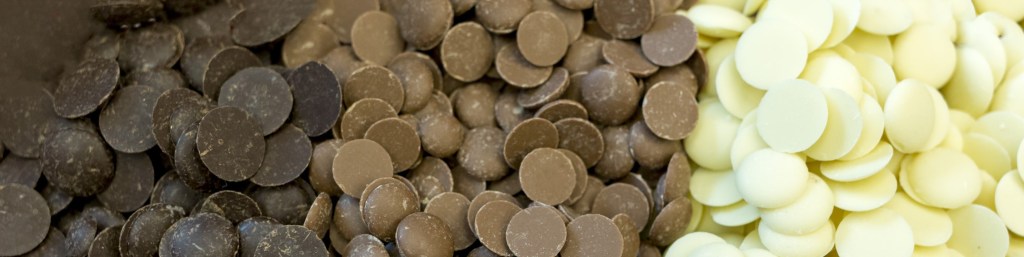
To make dark chocolate, you need only three ingredients – cocoa, sugar, and cocoa butter. The changes in taste across dark chocolates reflect changes in those ratios. To be labelled as “dark chocolate,” it must contain a minimum of forty-three percent cocoa solids, but dark chocolate can go as dark as ninety percent cacao. [i]
Dark chocolate without any sugar is known as bitter or baking chocolate. You’ll be sorry if you sneak a piece from the pantry as a child, or so I’ve heard.
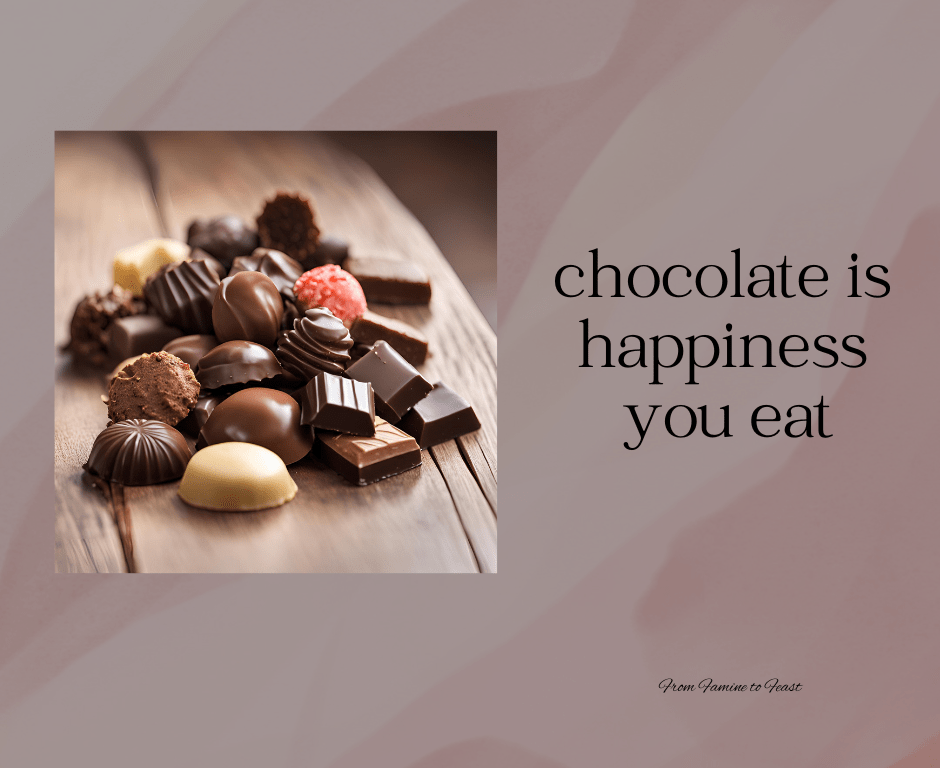
Milk chocolate, regarded as the most popular (by more people than just me), is so labelled because of the addition of milk solids. I love the creaminess of milk chocolate, the way it melts in the mouth.
I prefer my chocolate unadulterated, but happiness is occasionally a chocolate-covered caramel or mint truffle.
Ratios define milk chocolate as well – it must contain minimums of twenty-five percent cocoa and fourteen percent milk-derived ingredients though as is the case with dark, one can go higher.
Milk-derived ingredients are things like skimmed milk solids, and whey and milk powders. Using powdered products allows chocolate makers to improve the smoothness and creaminess of the chocolate while keeping water out.
Water makes your chocolate seize.
White chocolate is pale in colour because it lacks cocoa solids. It’s still chocolate, however, purists’ complaints notwithstanding, as it’s loaded with cocoa butter – a minimum of twenty percent is required.
The addition of sugar, vanilla, and milk products – a minimum of fourteen percent – makes white chocolate a tasty treat. The creaminess and milky flavour profile are why it’s often used to create other chocolate-adjacent confections.
I used to love a Cadbury Neapolitan bar. Milk, white, and strawberry chocolate products together as one.
Texture has a significant impact on my reaction to foodstuffs, candy included. I’m told I’m picky; I prefer to think of it as being discriminating.
Melt in the mouth is less pleasant when there are peanut fragments to contend with.
Cacao and cocoa
The main ingredient in chocolate is cocoa. As is the case with most things, cocoa comes from the store. I have a tin in the pantry right now. But before it came to be a powder in my panty, it lived on a tree.
Did you know that cocoa comes from fruit? Cocoa powder is what you get when you process the paste made from dried and fermented cacao pod seeds.
The pods grow on the trunks and branches of the cacao trees, and the trees grow best in the equatorial zone. Nearly seventy percent of the world’s cocoa comes from West Africa, primarily from Cameroon, Ivory Coast, Ghana, and Nigeria, though as we live in modern times, pods for the home enthusiast to play with are available almost everywhere as well.
I prefer my cocoa already processed, but to each their own. Though I do have a mortar and pestle should I develop the urge.
Turning pod contents into powder isn’t a complicated process, all you need are seeds, time, and space.
After you’ve harvested a good supply of pods – and I won’t be doing this because I’m too haphazard to play with machetes – you strip the pod and scoop out the seeds for fermenting and drying – drying takes between four and seven days depending on method and location.
Once drying is complete, the beans are roasted and peeled to reveal the cocoa nibs. These bits of cocoa are then ground into a paste (also called a ‘cocoa mass’), a process not unlike making tahini.
The paste is pressed, and voila, cocoa powder and cocoa butter for your pleasure and production needs. The powder is where most of the flavour lives; the cocoa butter adds creaminess and softer textures to the final product.
There are several types of cacao trees, and the cocoa from each differs in flavour profile. Chocolate producers and chocolatiers take the type of cocoa into account when buying cocoa powder and butter. [1]
There are four main varieties of cacao bean: criollo, forastero, nacional, and trinitario. Forastero is the most common and widely-used type, and criollo is the rarest and most prestige.
Where the trees grow also impacts the flavour of the finished cocoa. Sun, water, and soil figure heavily in agriculture end products.
It’s why I like California oranges better than Florida ones. Geography impacts taste.

How chocolates are made
Cocoa products aren’t chocolate, however. Making cocoa is just the first step.
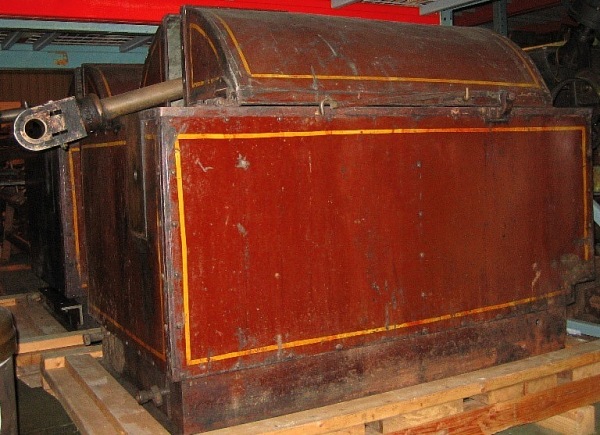
All chocolate is prepared in the same way. The ingredients are gathered into a surface-scaping mixer called a conche, so named because the grinders of the original design resembled a conche shell. Some still do. [2]
“Conche” in this case is both verb and noun, referring to the device and to the process.
Conching mixes and aerates the chocolate ingredients, evenly distributing the cocoa butter while developing texture and flavour. The length of conching time varies and can last several days.
Conching times and techniques are as closely guarded as chocolate recipes, but generally speaking, the less time spent conching, the rougher and grainier the finished chocolate, though technological improvements have reduced overall production times somewhat.
After conching, the chocolate needs tempering before what’s being made can be finished. If chocolate’s not tempered, it won’t properly harden. Without tempering, there’s no crunch when you bite.
Tempering gives chocolate its shine and helps prevent fat and sugar from blooming on the chocolate’s surface as it ages. Separating chocolate is okay to eat, but not lovely to look at.
Chocolate is for a good time, not a long time.
The tempering process is simple enough on paper, though its successful execution is reportedly challenging, especially for the home cook. When tempering, the chocolate is heated slowly until it’s fully melted, then cooled rapidly, and finally reheated to the temperature that encourages the development of stable cocoa butter crystals throughout.
The ideal tempering temperature varies across dark, milk, and light chocolate. Happiness is chocolate, but it’s also a kitchen thermometer.
That tempering needs doing is information that would’ve been nice to have before I made chocolate-dipped strawberries that one time.
They had very little snap.
They still tasted okay.
References
From Bean to Bar: How Chocolate Is Made
What is the Chocolate Refining Process
[1] Producers make chocolate, and chocolatiers make the treats. Some companies do everything, and some chocolatiers purchase already-produced chocolate to work with.
[2] Invented in 1879 by Rudolph Lindt
[i] Just as cocoa and milk products vary, so does sugar. White, beet, cane. Honey. This impacts the final product as well.
 From Famine to Feast
Wow Michelle seems like you have a real chocolate affair going on there 🤣. I’m a chocolate lover too but unlike you, I’m not too interested if there’s no “texture” in my chocolate like coconut, peanut, cashews etc. Makes me feel like running out to get one of those Cadbury bars, with peanuts of course 😊.
LikeLiked by 1 person
It’s true. I’m such a fan. I hear PayDay is good for the peanut lover, though we don’t get that one here.
LikeLiked by 1 person
That’s right, I have my payday fix ever so often 🙂.
LikeLiked by 1 person
I discovered your blog from A Grace Full Life. My daughter is recovering from an eating disorder and your blog helps me understand what she is going through. Also, my mom died 18 months ago, so we have that in common, too.
LikeLiked by 1 person
I’m sorry we have the mother loss in common. It has been a hard. I thought I’d thought enough about death. My mistake.
I’m glad you’re finding information that helps. Eating disorders are strange and weird worlds. I wish very much I hadn’t been so hostile towards help for so long. I’m sending lots of healing energy to your daughter.
LikeLiked by 1 person
Thank you for your healing energy for my daughter.
LikeLiked by 1 person
I’m enjoying these hybrid posts: one part eating disorder recovery and one part education that is only obliquely related. I’m learning lots from these posts!
LikeLiked by 1 person
Thank you 😊. I appreciate the compliment.
LikeLike
Shoot–apparently I wasn’t logged into WordPress when I sent that last comment. FYI: It was from me. LOL
LikeLiked by 1 person
I do it all the time 😁
LikeLike
We hear your grief and your expectation of increased grief around anniversary. We hope you can meet needs for mourning
We buy the unsweetened baking chocolate, break up a bar and combine in glass bowl with 1/4 c maple syrup, heat 30 sec in microwave at 70%, stir and repeat by heating in 20 sec intervals and stirring until mostly melted. Stir vigorously to combine and pour into parchment lined glass dish roughly the shape of a chocolate bar. We lightly salt and then use a toothpick to make the lines of the future pieces. Then stick in the freezer. We store in the fridge after a few hours. We always, always eat it with peanut butter—one piece after dinner every night
LikeLiked by 1 person
What a good idea. I keep wanting to try things with chocolate, but mostly I worry and skip it.
I do love a treat ritual.
Thank you. It’s been hard, also because I’m doing a lot of meeting my dad’s grief needs.
LikeLiked by 1 person
Does still supporting him result in your feeling drained? Worried about him?
LikeLiked by 1 person
He contacts me or pops by multiple times a day sometimes. Always once, even when I touch base with him. It’s draining. And he’s struggling with some things, and that’s painful. And that it all is falling to me – I have two brothers – makes me angry, which I also don’t communicate.
Silence. Almost always a problem. Thank you 😊
I hope depression is ebbing, and hard feelings are ebbing as fall rolls in.
LikeLiked by 1 person
Draining being contracted multiple times per day. Lack of partnership with siblings, it sounds like. Anger at that situation. You are choosing status quo for now. You know remaining silent won’t meet unmet needs by itself.
We are using mental health therapy to explore feelings and needs. Losing one therapist and so scrambling to replace them; added another to recommend someone.
Reading more about patriarchal capitalism and planning to learn how to engage in alternative ways of being, knowing, connecting. This meets needs for learning and purpose right now. Feel curious and worried and eager about the topic
The dried leaves skitter across the ground and the resulting sound triggers us. We will consider strategies to address the hyper vigilance that results. Maybe we need strategies for noticing that we are safe in the present
LikeLiked by 1 person
That is it exactly. I sometimes think how nice it would be to have someone magic swoop in and fix things. However, in the books, that rarely ends well.
I enjoy economics and politics, and capitalism is an interesting topic. I find patriarchal capitalism worrying as well. It makes me happy to have an intellectual area I’m engaging in.
I’m sorry the sounds are triggering. I hate being hypervigilant. It’s very tiring.
LikeLiked by 1 person