Why is eating so hard?
Once upon a time, we ate according to hunger. We felt hungry, we communicated that fact, and our needs were met.
I have no memory of that time, and it’s likely you don’t either – the training to ignore our biological cues starts young. Learning to control and redirect our biology is a good thing when it comes to toilet training, but it turns out to not always be in our best interests when it comes to eating.
We’re instinctual eaters as infants because we’re new and needy, but we learn to postpone hunger and appetite as we grow, become scheduled, and memories of a quick response to our bodies’ demands fade.
Our brains mostly prioritize the last few years of memories – save for the highlight reels and outtakes. I remember hideous embarrassment forever. I still cringe over a paralyzing episode of stage fright I experienced at age ten that left me stranded on the stage.
We recognize our needs and hungers when we’re new. We can’t meet them ourselves, but we identify and respond. Which, at that age, mostly means noise.
When we’re hungry, we fuss. When we’re wet, we fuss. Babies comment on any deviation from the ideal, and usually, it’s attended to. It’s survival behaviour – babies need to be focused on getting their needs met – it’s ‘do-or-die’ when you’re a wholly dependent creature.
That simplicity and sense of recognition are lost to us as we grow. We learn to defer. And as our needs become less urgent, our wants start to have more weight.
Before too long, we start judging ourselves for having either.
Needs and Wants.
We all want a lot of things, and for me, historically, quite a few of those things were related to food. And, why wouldn’t my desires be focused there? We want what is forbidden, and an eating disorder forbids much. The list of allowed foods was scant, and wants were irrelevant to its creation.
Eating a desired food while bingeing and purging doesn’t satisfy a want, it merely moves the food into the pathological category. Now you’re a bad person if you want it. Now you’re a bad person if you indulge.
It often seems to me that eating disorders shine a light on bigger problems in society. We pathologize wants and needs to a certain extent.
A big part of eating disorder recovery is not just recognizing that you have needs and wants, and learning the difference, but learning it’s okay to have both.
The difference lies in priority and imperative. “Needs” are necessary. “Wants” are whipped cream. I taught this lesson to my children from a young age – even as I ignored it myself – and it’s an important distinction. You don’t need that new toy, you want it.
You don’t need to give way to negative behaviours, but sometimes you want to.
What’s in our control?
Complicating the issue of meeting our needs and wants vis a vis food is that when we’re children, we’re not in control of much. The food choices, prep style, and method of serving and presentation are out of much of our control. This can be a significant hurdle for some, especially for people with sensory processing issues.
We’re also not used to recognizing and respecting autonomy in our children. It’s new behaviour. Giving children some level of control in their choices helps them learn the want-need distinction.
I couldn’t wait to be an adult, and have more control in my life, to have more control over the when and how and what of my eating. But control as an adult isn’t as unfettered as I imagined. Adults aren’t the omnipotent beings I imagined they were when I was young. It turns out we’re mostly the same inside as we age.
Choices are controlled and constrained by many things, including our geography and financial circumstances. Our choices are influenced as well, more than we’d like to believe, and what is influence if not a type of control? Advertising is insidious, and these days, it’s hard to escape. They put that stuff on everything.
We have less control over the what of food than we’d like; and we’ve also changed the how. We’re not, most of us, terribly mindful when we eat. The sit-down dinner with family and friends is becoming, more and more, a special occasion event, rather than the matter-of-course behaviour it was in my youth. Phones are more omnipresent at mealtimes, and there’s pushback against isolation and distraction as we consume.
I’m certainly not doing a good job of mindful eating. That’s not terribly unexpected. People with eating disorders tend to distance themselves from the behaviours we’re pathological about. Eating mindfully was always going to be an uphill battle, and I haven’t devoted much energy to the fight, especially now that I live alone and giving way to sloppy habits is easy.
Mindful eating.
Part of my eating disorder recovery has been relearning how to eat, and part of that was supposed to be eating mindfully. You know, eating at a table, with no distractions aka the phone or television, a balanced meal instead of a uni-food offering, and possibly even courses.
I’m not good at it. I’m not good at eating “properly” – in part, because I let myself hang onto the I don’t want to cry of my bulimia. It’s a glitch in my recovery matrix. It’s a glitch in quite a few people’s matrices, as best I can tell from observation.
Fewer and fewer of us are eating well by any metric, neurotic or not.
I didn’t make developing good eating habits a priority in my recovery. I did for a minute-and-a-half, but then I had to deal with a massive depressive episode on top of trying to hold eating sobriety, so I went with “whatever works.”
Some in my circles tried to encourage a more structured pattern, but the plans and the schedules felt too much on top of putting the brakes on binging, purging, and starving.
Then again, I’ve always been resistant to externally imposed schedules.
I was focused on survival in the early days of recovery, not on thriving. Both my longtime counsellor and psychiatrist advised me not to worry too much about the “one true way” appearance of recovery. The important thing is the recovery. The important thing was the abstinence.
I perhaps took those recommendations literally for a bit too long.
I’d periodically try to smarten up with meal planning, and with more variety in my diet, but it didn’t take, mostly because a plan that exists only in your head is a wish. Breaking the lazy habit of eating in front of the computer or television is harder when you keep your desire secret.
But unfortunately, if you don’t build it, it won’t come.
Going forward.
I’m approaching the five-year mark of abstinence, or ‘normal’ eating in my eating disorder recovery, and of late, I’m starting to feel that I live more on the eating disorder recovered side than not, knock on wood.
Recovery feels solid, almost substantial. And now I’m aware of the deficits both nutritional and behavioural that I’ve previously given a pass to. I’m aware I can do better, that I can improve the what and how of my eating. There’s no real downside to doing so – the body is happier when it’s nurtured and well-fed.
I made the decision to improve things last week when I was stressed and not eating. It turns out that I lose my appetite when I’m under too much stress. I had no idea. That was a piece of information my eating disorder kept hidden. Appetite has very little to do with whether and what you eat when an eating disorder is ascendant.
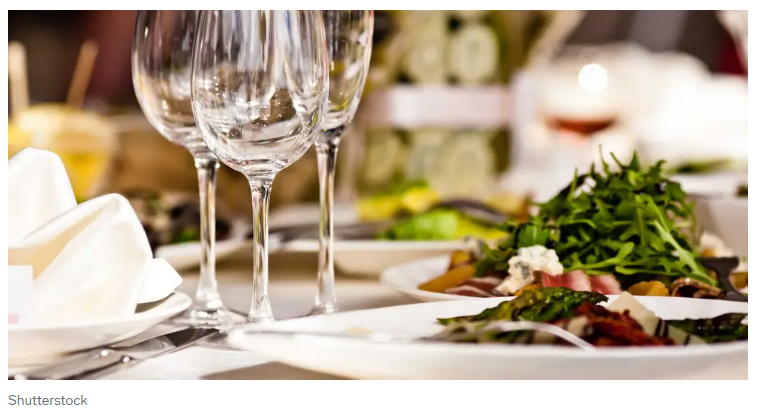
Part of the changes to my behaviour will be temporarily costly – I’m going back to eating out in restaurants more. I did that fairly often in early recovery. It’s helpful: I get a good meal, mostly nutritionally balanced, and I’m forced into appropriate meal-time behaviours: at a table, with a place setting and napkins, possibly even multiple serving dishes.
An improvement from death scrolling at the computer. An improvement on the rice bowl that makes up seventy-five percent of my meals.
It’s okay to be nice to ourselves, notwithstanding that so many of us – too many of us – find it challenging. It’s a good thing, to treat yourself well. Push back against the feelings that say otherwise. Practice.
And I’m sticking with the “writing it down” plan. I’m more successful when I commit to concrete plans, draw a line in the sand, plant my feet, and take a stand.
Or, a seat.
 From Famine to Feast
Yay for restaurants—and congrats on five years!! I’d be willing to bet the majority of us could stand to improve our eating habits—I certainly could. I hope your strategy works for you. Report back on your results!
LikeLiked by 1 person
Thank you ☺️
I had brunch out this morning.
I find making myself accountable is helping me stay on track so far – I forgot that I love using my cloth napkins.
LikeLiked by 2 people
Yasss!! 🙌🏻🙌🏻🙌🏻
LikeLiked by 1 person
Congrats on five years of abstinence and happy you’re feeling improvement! You’re right it’s okay to be nice to ourselves.
LikeLiked by 1 person
Thank you 😊
LikeLiked by 1 person
We feel interested in new awarenesses, such as the loss of appetite during high stress
We feel joy that you intend to use that info to meet needs for self-care 💗
Please raise a (restaurant) glass to self-care 🥂
LikeLiked by 1 person