
To sacrifice is to give something up. It’s not something that just happens, however. To sacrifice is to make a choice. It’s the giving up something of value in order to help someone else. We even do it in sports – the sacrifice in baseball involves one player choosing the out in order to advance to base or home.
People often phrase sacrifice as something imposed that we now regret – I gave up everything for him, and he cheated on me – and there’s an element of societal pressure to our choices for sure, but they are our choices. Buyer’s remorse doesn’t change that fact.
The choice may be impaired by external constraints, and the options may be lousy, but choice remains.
I’ve given up much in the service of my eating disorder, and in the service of mental illness, but I’m not sure I’d call that a sacrifice. There was less choice involved than appears at first glance, and choices made under duress or compulsion aren’t sacrifices as such. Or choices, when you get down to it. There’s no freedom there. And without freedom, there’s no possibility of sacrificing the self.
But it’s an interesting question to ponder, the idea of self-sacrifice. Have I given up anything of value to help another person beyond tokenism in the form of monies donated to causes I don’t give time to?
I used to volunteer more and spend time helping others, but I didn’t consider it a sacrifice. It was helpful to me, in fact.
I mostly don’t subscribe to the idea that spending time with other people is a sacrifice. I don’t subscribe to the idea that parenting is a sacrifice. See above re choices.
We cannot do everything we want to do in this life. Most of us have limited resources, and all of us have limited time. But choosing X over Y isn’t automatically sacrificial.
I make choices about how I spend my time and money as a parent, daughter, partner, friend, and employee, but that’s less about sacrifice, and more about the reality of life. Relationships require work. Partaking in that isn’t something I label as sacrifice, though the time demands can piss me off. I do like to make my life all about me.
Is not giving into our own selfishness a sacrifice? We’re certainly desperate to label the matter-of-course expectation of adulthood as such. We seek evidence that we’re good and virtuous people everywhere. Could it be that we find our lives lacking in those qualities? But virtuous choices can be hard, and sacrifice is often unpleasant, and who wants that?
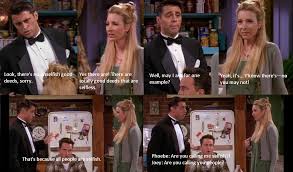
Besides, I’m not sure sacrifice qualifies as virtuous. In sports, sacrifices are tactical, and I’m not sure they’re not in life as well. The idea of virtuous sacrifice reminds me of an episode of Friends, the one where all acts of kindness are selfish. It’s an interesting thing to ponder. Is sacrifice selfish if it also makes us feel good about ourselves?
Sacrifice exists in the context of religion as well, both metaphoric and literal, though the latter and living things is hopefully lost to the mists of time. It wasn’t so long ago that humans were unaliving things in order to praise and appease the gods they were worshipping. But those sacrifices aren’t about virtue either.
Religious rules are about creating an exclusive community. Special requirements help keep people in line, and make it easy to identifying those that belong. And being an outsider in life is a sacrifice. Not belonging to the majority tribe is a sacrifice. We’re social animals. We need connections.
Perhaps deliberately risking that – and having it go badly – in the pursuit of what I know to be right is my sacrifice. Though I don’t always live doing the right thing loudly anymore. I wear silence more often these days – I’ve experienced ostracism that can come with standing your ground. It’s a hard road to walk, and I’m tired.
Doing the right thing can lead to unwitting sacrifice. It doesn’t mean you don’t do it. But it’s good information to have going in.


 From Famine to Feast
We hear you feeling curious and confused about what a sacrifice actually is.
We felt agreement when we read that you believe there is choice in what we do. We also agree that mental illness creates confusion around choice or maybe distorts which needs of ours we fulfill and how we choose to fulfill them. Obsessions and compulsion are something we think about as distorting factors. Do you think so, too?
Does this summarize some of your feelings and thoughts?
Nonviolent Communication suggests that every single action taken by every single person ever in history (and in the future) is made to meet needs.
If that is accurate, then we know the motivation for every action in the history of humanity.
We feel confused when the judgment “Selfishness” Is applied to people’s actions. If every action fulfills a need, who isn’t selfish? What does the judgment mean? What feelings of ours are embedded in that judgment of selfishness? Disgust? Concern? Regret?
Maybe “selfishness” could relate to this: to have a nonviolent world, each individual cares about the other’s needs as equal to their own. The Donald Trump supporter who meets her need for safety by not getting vaccinated has the same need for safety as the person who meets her need for safety by getting vaccinated. We would see each other and recognize the need, even if we dislike the strategy.
The needs are the same.
The strategies differ.
NVC suggests that conflict arises from strategy differences. Every argument, war, dispute. Misunderstanding might also play a role?
If we can care about the other human being’s needs the same way we care about our own needs, then we will try to choose strategies that meet everyone’s needs. This is the world we want to live in. We can have this world only if we ourself can embody this. So we are trying so hard!
If someone is unvaccinated, then maybe we mask, stay 6 feet apart, stay away, ask them if they will mask. Try to get each other’s needs met. It’s a constant dance.
And we hear you about trampled feelings and fatigue and fear in standing up for what you value once you have faced resistance.
Maybe “selfishness” is when we think of our own needs exclusively and don’t value another’s needs as equal to our own.
When we focus on needs—and don’t judge strategies—we can humanize everyone, we hope.
Maybe “selfishness” Is a cue that we are in fear our concern or awareness that not everyone’s needs are being valued equally.
How do you feel when you read about our consideration of selfishness?
And hi! How are you feeling today? Our neighborhood has utility work so that strangers are digging our yard with big machines and shovels. We feel jittery from the vibrations and have the blinds closed. We don’t feel unsafe, though.
LikeLiked by 1 person
Obsession and compulsion definitely distort choice. I had far less choice when my bulimia was active – all is filtered through the ed’s requirements.
I believe – or have come to believe – that as well, that the choices we make are to meet needs, even if we don’t know what those needs are. That’s a big part of eating disorder recovery as well. An eating disorder is often a coping mechanism, the self’s way of dealing with trauma or difficulty. It’s a maladjusted survival behaviour.
“If we can care about the other human being’s needs the same way we care about our own needs, then we will try to choose strategies that meet everyone’s needs. This is the world we want to live in. We can have this world only if we ourself can embody this. So we are trying so hard!”
This is the world that we would all like. I think that definition of selfishness – exclusively focused on our own needs to the exclusion of other priorities – is a good one.
When I feel people in my orbit are behaving towards me in a way I consider selfish, my kneejerk is to try harder, which is passive aggressive in a way. So, the concept is perhaps a little triggering for me as well.
I’m not my best self right now. I’m reacting to the prazosin now with some fairly bleak thoughts. We’re pausing until I level.
I’m sorry for the environmental disturbances, especially noise. I would find that very distressing. Unpleasant noise I don’t control can be difficult.
How is the mood, the depression? How is spring otherwise – lovely? Ours is getting there. Sun does help me.
LikeLiked by 1 person
We feel concern about your side effects of prazosin. We feel so frustrated that meds intended to help our mental health can harm it! We wish you the most ease possible as you pause and try to regain equanimity
ED as a survival mechanism we understand and have compassion for. That is to say we understand survival mechanisms that are themselves harmful but meet our needs for order and maybe stability. And that is to say we feel compassion for you because you survived the best way you could, even as that way was harmful
Your kneejerk is to try harder when you perceive selfishness. Ours is to protect ourself: fight or flight
Spring here is alternating between pleasant and hot. Rain in sufficient amounts might alleviate multiple years of drought and so we feel hopeful that some of our plants that have never bloomed will finally do so (rattlesnake master, in particular).
Mood is depressed. Older Child moved 1,074 miles (1728 km) away. We feel lonely and mournful and dejected. We spend much of our time supporting Spouse and Younger Child. We have gone birdwatching a few days, which offers potential for connection and fun. If 1 is joy and 10 is suicide, we’re probably 7 pretty consistently these days.
We had a few adventures recently that met our needs for meaning. Can’t really replicate them anytime soon. Maybe memories of them can do more than embitter us to our status quo
We had thunderstorms last night. We get scared when thunder wakes us up. Spouse helped us. How are you with thunderstorms?
LikeLiked by 1 person
I love thunderstorms. I love lightning, and big wind. I was living in Vancouver, going to university, and we had a typhoon – Pacific Northwest Hurricane – though not terribly severe. I love it. My opinion might change if I experienced disaster level.
Is it the noise, or the unexpectedness of the sounds, or just all of it that is disliked?
I’m sorry about that mood evaluation – it’s high. I wish there was something I could do to fix it – I’m glad my children are relatively close geographically.
I find there’s a line for me with helping others beyond which I get diminishing returns – it makes me feel down and dejected as well. My therapists suggest this is because of imbalance in my relationships – though balance is hard with our children.
How funny that neither of us responds with talking about the problem.
Thank you for the concern. As mentioned, it’s reciprocated. In a strange way, episodes like this are helpful – sometimes, my brain questions my reality, the seriousness of my issues. Misery as validation.
A doctor once pointed out to me that it’s only the strongest of us who created this survival mechanism. We endure where others might not have. I always like that thought.
LikeLiked by 1 person
We often feel startled and triggered into hypervigilance by thunder. We can feel unnerved when anticipating the thunder after the lightning. We do not like when the windows rattle
We feel confused about making specific requests to meet our needs. We have trauma associated with asking for needs to be met so that sometimes we think asking will make things worse. It’s hard for us to even imagine what would improve our life other than drastic changes like moving far away (which may not help anyway?).
We will need therapy attention on how to notice specifically what we want to ask for and how to process the response
We got triggered twice yesterday by YC’s dog and so we were able to finally request to not walk the dog for the indefinite future. We hope this will add ease and space
We met our need for contribution and support of others via cooking and laundry and such on a daily basis. We want less stress and space from the dog might help that
We found that reminding ourselves we can choose to step outside right/wrong binaries can relieve stress. We have to remind ourselves—or rebuild—our preferred worldview throughout the day most days because we get weighed down into judgment and binaries through how other people in the world communicate and think. We want to be different (we want nvc thinking) and we have no immersion in it. So it fades quickly!
Writing like this is a chance to take time to order our world
We fear face-to-face. We had some friction with YC yesterday, and YC has strong reactions, and we had steering reactions to that. So we feel tense and scared and hesitant.
We appreciate this opportunity to connect with you.
Balance in relationships with children does confuse us, too. Can you say more about how you perceive the imbalance in your experience?
LikeLiked by 1 person
I relate very much to struggling to make requests to meet our needs. I also have trauma there, plus fear of rejection due to having the nerve to ask.
For me, part of that stems from other people’s corrections – “that’s not what you need, let me tell you what you need,” or things along those lines, why your needs are wrong comments. It gets easier to not ask if you’re regularly corrected or rejected. This is something I’ve worked and continue to work on in therapy – asking, and standing my ground.
My therapist would likely point out that those of us who struggle to get help with our needs are also very hard on ourselves across many metrics. I judge myself harshly for struggling with things that are hard. Not winning self-parenting.
My PTSD has been fired up of late – I’ve written about it here and shared on Threads. One response that came with information designed to help was about wearing headphones. I found it really calming – I listen to music I like, but I don’t think it matters. It helped me stay more present, but also less impacted by my triggers. I think it’s maybe the mental equivalent for me of wrapping up in a heavy blanket or jacket – those help me when I’m triggered as well.
Being on edge and easily triggered is very tiring.
When I’m down, I become very hard on myself, very judgmental. I hear that here form you. It seems that there is upset because of choices not being made, or because we are choosing a more familiar road while in distress. We do like to be mean to ourselves.
Newer behaviours fade more easily than older ones. We have to remember to give ourselves grace about that. It’s work in progress. I’ve also started treating myself when I’m feeling like garbage and crap – something nice from Amazon or the like. Small indulgences. Being nice to ourselves when we’re suffering feels counterintuitive – weird – and yet helps. Indulgent nice, not fiber nice.
I find people with strong reactions challenging too, and it’s that much harder when it’s family. We’re conditioned to accept more in the way of rudeness and pushing.
I appreciate the connection as well. I look forward to the conversations.
I think with our children, we’re habituated to sacrifice. It’s a societal belief baked into our bones, even when we try differently. So, I find boundaries harder with my kids – not that I’m fabulous with them anyhow. But somehow, with our children, we let them behave towards us/talk to us in ways we wouldn’t tolerate from other people. With my kids, I forget sometimes that I’m not a doormat, that I don’t owe them everything forever and always regardless of what they do and/or say. And that relationships go two ways – they must contribute as well.
I think for me part of this is the fear of rejection that colours most of my relationships. My brain interprets much as rejection, and so it also extends that to other people – if I say “no” to my kids, will they feel rejected?
Would that we treated ourselves with the worry and care we extend towards most other people.
LikeLiked by 1 person
“It gets easier to not ask if you’re regularly corrected or rejected”
This makes sense to us
What is “Threads”?
Weighted blanket we fall asleep with some times and then kick it off. We have earplugs. We use noise canceling headphones on Independence Day due to fireworks (similar reaction as thunder)
Newer behaviors do fade! We forget people, like therapists, where we don’t see them
We do accept more resistance from YC than we would from non-family. we do worry that our “no” can harm them. A therapist thinks we can be more open with family about feelings, needs, and requests— and see where that leads us
Last night, angry and sad, we withdrew and someone in our head said, “Do you want space? Or do you want connection?” Hard to get needs met when we don’t know them or have internal conflict! Asking even inside feels confusing
Depression is giving us some ease cuz it’s tamping down hypervigilance
LikeLike
Threads is the Meta (Facebook) version of Twitter. Twitter has turned into an cesspool of hate and misinformation since Elon Musk took over. But the format of Twitter and Threads lends itself to politics, and politics is quite my jam.
I’d never thought to use them before for a flare of PTSD either, but sometimes I find I need help in making my world smaller and therefore manageable.
I spent years hiding my mental health reality from my children, and the severity from friends. In the end, it has harmed me more than it has protected them. I think it factors into the challenges with my stepdaughters – they perceive me as neurotypical and unchallenged.
We want to protect our children. I forgot that how I can do that changes as they age. But even now, I don’t really talk to them about how dire things sometimes are. I should work on that.
That is a good question to ask – I find I will withdraw sometimes if I want connection. I want people to notice and pay attention via my absence.
It’s nice to have a break from that hyper-attentiveness. Isn’t it interesting that even our issues have occasional positives attached. But pay attention to those numbers 💜
LikeLiked by 1 person
We know that Twitter exists because we get sent links. We sorta know how to view them lol. We’ve never been an active social media user, never had a geocity, myspace, facebook, insta, snap, tiktok. We don’t watch these site’s videos, except the rare ones sent by our children. We appreciate curation.
We used to upload nature videos to YouTube. They used to pay us a few dollars a month for the ads. Then they started to pay only big, big producers of content and we had an unmet need for inclusion. We responded by not participating, which sounds akin to withdrawing when we want connection
Do you live near mountains? We enjoy seeing them. The nearest 2134 m peak is 968 km away. So we don’t see them very often.
Some of us want to be wanted and some want space. We had an internal conversation today because the body hurts from young inside people operating it. More resourced us asked how we can protect the body while preserving young insider’s autonomy. No answer yet. We feel surprised the conversation itself was allowed. Therapist tomorrow may also express surprise or pleasure, if we remember to talk about it. We don’t all choose the same strategies for meeting needs. Resourced us wants to limit avoidable pain and suffering. Younger us’s act more impulsively and have less information. So we get hurt.
LikeLike